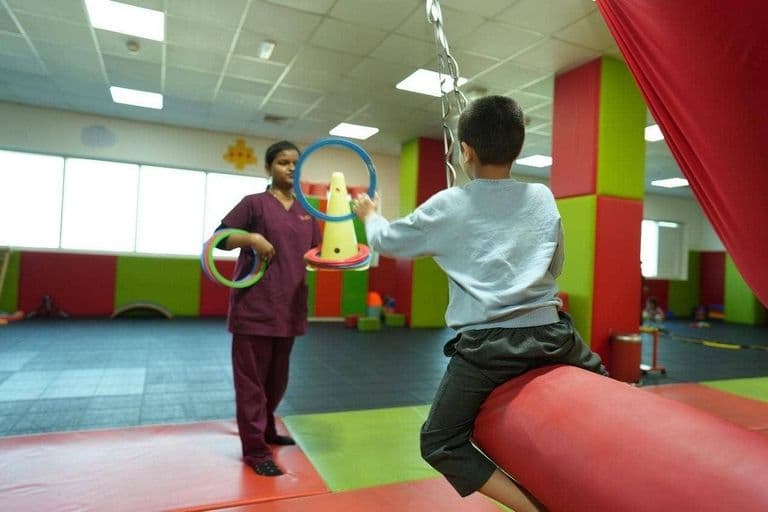
Supporting Children with ADHD in the Classroom: What Actually Works
Classrooms can be challenging environments for children with ADHD.
By Jewel Centre for Autism ·

Introduction
Classrooms can be challenging environments for children with ADHD. Long periods of sitting, multiple instructions, sensory distractions, and academic demands can overwhelm attention and regulation systems.
Many traditional classroom strategies focus on controlling behavior. However, effective support involves understanding how ADHD affects participation and learning.
What ADHD Looks Like in the Classroom
Children with ADHD may:
- Fidget constantly
- Lose focus quickly
- Interrupt frequently
- Forget instructions
- Struggle with transitions
These behaviors often reflect neurological regulation challenges rather than intentional disruption.
What Actually Helps
✅ Movement Breaks
Movement improves attention and regulation.
✅ Flexible Seating
Alternative seating supports active attention.
✅ Visual Supports
Schedules and visual instructions reduce working memory demands.
✅ Reduced Sensory Overload
Minimize excessive noise and visual clutter.
✅ Clear and Short Instructions
Simple directions improve processing.
✅ Positive Relationships
Children learn best when they feel understood and supported.
The Role of OT in Schools
School-based OTs collaborate with teachers to:
- Adapt environments
- Improve participation
- Support regulation
- Develop classroom strategies
The focus is participation, not just behavior management.
Final Thoughts
Supporting ADHD in classrooms is not about forcing stillness — it is about creating environments where children can succeed. When classrooms support regulation and movement, attention improves naturally.
References
DuPaul, G. J., & Stoner, G. (2014). ADHD in the schools: Assessment and intervention strategies (3rd ed.). Guilford Press.
Barkley, R. A. (2015). Attention-deficit hyperactivity disorder: A handbook for diagnosis and treatment (4th ed.). Guilford Press.