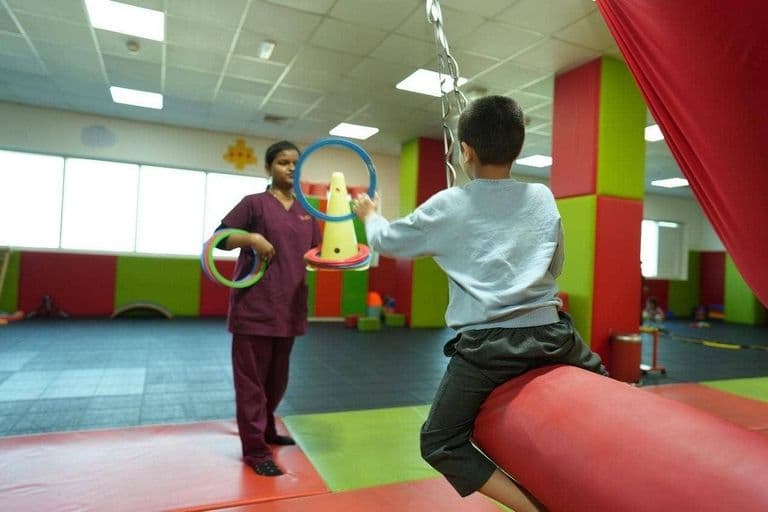
The Power of Play: How to Engage Children Under 4
Playing with your children is one of the most valuable things you can do for their development, especially when they are under four years old. Play is not just about having fun; it is the primary way young children learn about the world.
By Jewel Centre for Autism ·

Playing with your children is one of the most valuable things you can do for their development, especially when they are under four years old. Play is not just about having fun; it is the primary way young children learn about the world.
Here are four impactful ways to play with your child and how they help their growth.
1. Pretend Play
"Pretend play" allows children to explore different roles and scenarios. This type of imagination-based activity helps them understand social roles and develop creativity.
● Kitchen Set: Cooking imaginary meals.
● Doctor Set: Caring for "patients."
● Roleplay: Pretend driving, shopping, or acting out daily routines.
2. Sensory Play
Sensory play engages a child’s senses—touch, sight, smell, and hearing—which positively influences brain development.
● Tactile Activities: Sand play and water play.
● Visual Sensory: Blowing bubbles and watching them float.
● Movement & Sound: Singing songs and encouraging the child to sing back, performing action songs, smelling flowers, or pretending to ride an elephant while sitting on a parent's back.
3. Teaching Problem-Solving Skills
Playtime is an excellent opportunity to teach critical thinking. You can introduce small challenges that encourage the child to find solutions.
● Example: If you are building with blocks and they fall, ask the child, "How can we keep these blocks straight without falling?" or "How can we stop them from falling down?" This prompts the child to think critically and learn how to solve problems in real-time.
4. Structured Play
Structured play involves specific tasks with clear goals. This type of play is great for building attention, concentration, and academic concepts.
● Puzzles: Great for learning shapes and colors.
● Vocabulary: Teaching the names of animals, birds, and fruits.
● Table-Top Tasks: These activities help prepare children for more formal learning environments by focusing on specific objectives.
How Long Should You Play?
The duration of play should always be decided based on the child’s age and interests. A good goal is to spend at least one hour a day engaging with your child.
However, keep in mind that young children often have short attention spans. They may focus on a single activity for only 2 or 3 minutes. Therefore, it is important not to force one activity for the
entire hour. Instead, rotate through different activities every 15 minutes or so, choosing games that align with the child's current interest.
Conclusion
Whether it is the imagination of pretend play, the physical engagement of sensory play, or the focus of structured tasks, every moment spent playing builds a stronger foundation for your child's future. Start playing today!