Why Is My Child Not Responding to Their Name? Understanding Delayed Name Response
When a child does not respond to their name, it can be worrying for parents. One of the early communication skills children develop is recognizing and responding when someone calls their name. If a child does not turn around or react when their name is called, it may be a sign that something needs attention.
By Jewel Centre for Autism ·
Introduction
When a child does not respond to their name, it can be worrying for parents. One of the early communication skills children develop is recognizing and responding when someone calls their name. If a child does not turn around or react when their name is called, it may be a sign that something needs attention.
Sometimes, children become deeply focused on an activity and may not respond immediately. This is normal from time to time. However, if it happens consistently, it may indicate an underlying developmental concern.
Understanding why a child is not responding to their name can help parents determine whether professional support may be needed.
What Is Name Response?
Name response is a child's ability to recognize their name and react when someone calls them. This response may include:
- Turning their head toward the speaker
- Making eye contact
- Smiling or acknowledging the person
- Responding verbally
- Following a simple instruction after hearing their name
Most children begin responding to their name consistently between 6 and 12 months of age.
Why Might a Child Not Respond to Their Name?
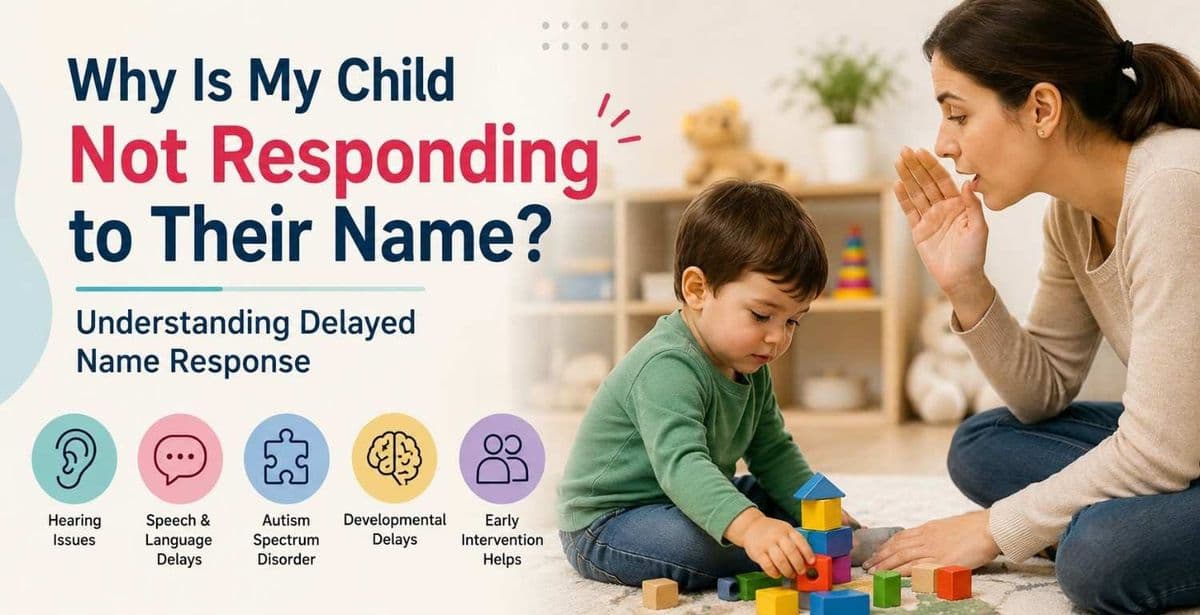
There are several reasons why a child may not respond to their name:
Hearing Difficulties
If a child has hearing problems, they may not hear their name clearly and therefore may not respond consistently.
Attention and Focus Challenges
Some children become highly focused on what they are doing and may not notice when someone calls their name.
Speech and Language Delays
Children with speech and language delays may take longer to understand that their name is a cue that requires attention or a response.
Autism Spectrum Disorder (ASD)
Delayed or inconsistent response to name can sometimes be an early sign of Autism Spectrum Disorder. Children with ASD may experience differences in social communication and interaction.
Developmental Delays
Some children develop more slowly than their peers. General developmental delays can affect communication, attention, and response to social cues.
When Should Parents Be Concerned?
Parents should consider seeking professional advice if:
- Their child rarely responds to their name after 12 months of age.
- The child shows limited eye contact.
- The child does not seem interested in interacting with others.
- Speech and language skills are delayed.
- The child loses skills they had previously developed.
Early evaluation can help identify any concerns and provide appropriate support.
How Professionals Assess Name Response
When professionals assess a child who is not responding to their name, they may:
- Check the child's hearing.
- Evaluate overall development.
- Assess speech and language skills.
- Observe how the child interacts with others.
- Discuss the child's developmental history with parents.
These assessments help professionals understand the underlying cause and determine the best course of action.
What Can Parents Do at Home?
Parents can support their child's name response by:
- Calling the child's name in a clear and calm voice.
- Engaging in face-to-face interactions.
- Reducing distractions such as television or loud background noise.
- Praising the child when they respond.
- Participating in interactive play and communication activities.
- Reading books together regularly.
Consistent practice and positive reinforcement can help strengthen this important skill.
The Importance of Early Intervention
If delayed name response is related to a developmental concern, early intervention can make a significant difference. The earlier a child receives support, the better their chances of improving communication, social interaction, and learning skills.
Conclusion
A child not responding to their name does not automatically mean that something is seriously wrong. However, it is a sign that parents should pay attention to. If concerns persist, speaking with a pediatrician, speech-language therapist, or developmental specialist can help identify the cause and provide guidance.
Early support can make a meaningful difference in a child's development and overall well-being.