
World Autism Awareness Day Special – Home FM 92.2
On World Autism Awareness Day, it is important to discuss emerging concerns that affect children’s development. One such topic gaining attention is Virtual Autism.
By Jewel Centre for Autism ·
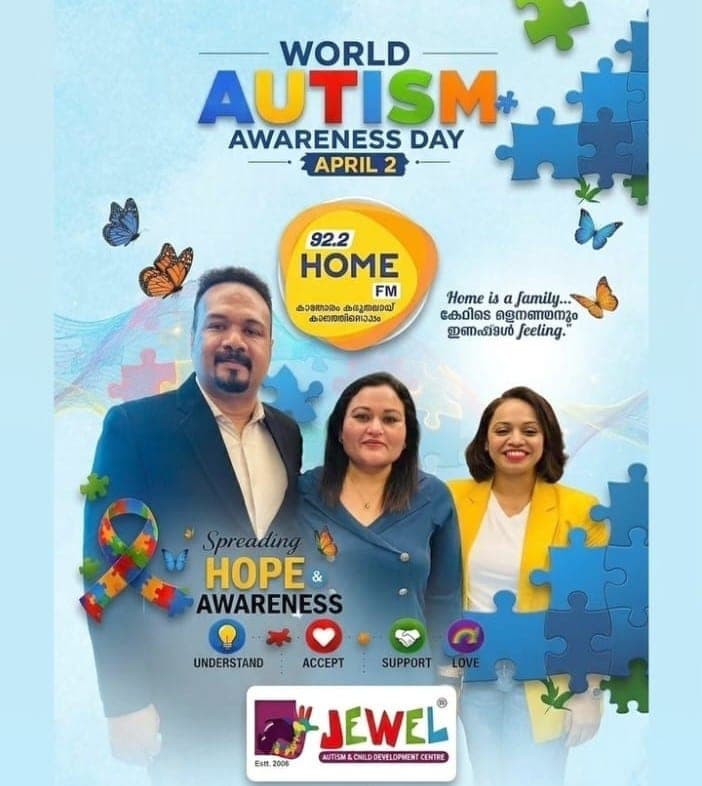
On World Autism Awareness Day, it is important to discuss emerging concerns that affect children’s development. One such topic gaining attention is Virtual Autism.
Insights by Dr. Jameson Samuel & Dr. Jency Blesson.
Let’s understand this condition better, support early intervention, and work towards creating a healthier environment for every child.
What Is Virtual Autism?
In today’s world—whether in India or abroad—children are increasingly exposed to excessive screen time. Many parents notice that their children are becoming highly dependent on mobile phones and other digital devices.
There is a common concern:
Can too much screen time cause autism?
While screen time does not directly cause Autism Spectrum Disorder, excessive exposure can lead to symptoms that resemble autism. This condition is referred to as Virtual Autism.
How Does Screen Time Affect Children?
When young children, especially those under the age of three, spend more than two hours a day on screens, they may begin to show developmental concerns such as:
- Reduced eye contact
- Lack of response when their name is called
- Delayed or limited speech
- Reduced social interaction
These symptoms closely mimic those seen in autism, which is why it can be alarming for parents.
Is Virtual Autism Reversible?
The good news is that Virtual Autism is often reversible—especially when identified early.
With timely intervention and reduced screen exposure, children can gradually regain normal developmental patterns. Early recognition plays a crucial role in ensuring better outcomes.
Importance of Early Intervention
If parents notice early signs, seeking professional guidance is essential. With proper care and attention:
- Screen dependency can be reduced
- Communication skills can improve
- Social interaction can be restored
Timely support can help bring the child back to a normal developmental path.
Creating a Healthier Environment for Children
To prevent such issues, parents and caregivers should:
- Limit screen time, especially for children under 3
- Encourage interactive play and communication
- Spend quality time engaging with children
- Promote real-world learning experiences
Conclusion
Virtual Autism highlights the impact of modern lifestyle changes on child development. Awareness, early detection, and timely intervention can make a significant difference.
Let us use this World Autism Awareness Day as a reminder to build a supportive and screen-balanced environment for every child.