Why Does Speech Delay Occur in Children with Autism?
One of the most common concerns parents have after noticing developmental differences in their child is delayed speech. They may wonder why their child is not speaking...
By Jewel Centre for Autism ·
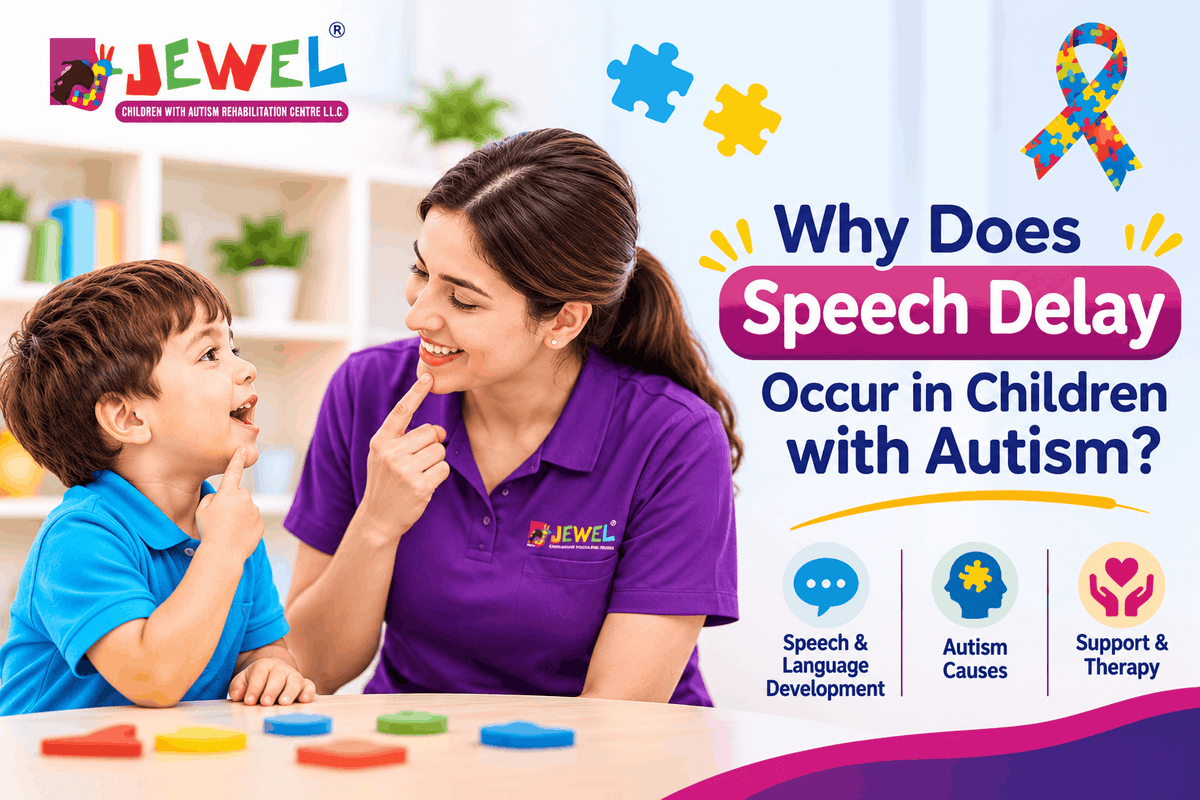
One of the most common concerns parents have after noticing developmental differences in their child is delayed speech. They may wonder why their child is not speaking, why they do not respond consistently when spoken to, or why they find it difficult to communicate their needs.
Speech delay in autism is a topic that deserves a deeper understanding. Although some autistic children develop spoken language later than expected, others may use words but experience difficulties with understanding language, expressing themselves or participating in conversations. Some communicate through gestures, pictures, signs or other methods.
So, why autistic children have speech delay, and what can parents do to support their communication development?
The answer is not always related to the ability to hear or produce sounds. Communication involves several developmental processes, including language understanding, attention, social interaction and sensory processing. Understanding these areas can help parents make informed decisions about their child's therapy.
At JEWEL Autism Centre, we believe that understanding the possible causes of speech delay is an important step towards choosing the right developmental support.
What Is Speech Delay in Autism?
Speech delay refers to a child developing spoken communication skills later than expected for their age. In autistic children, communication differences can involve both spoken language and non-speaking forms of communication.
For example, a child may:
- Use fewer words than expected for their developmental stage.
- Find it difficult to express needs and feelings.
- Have difficulty understanding spoken instructions.
- Repeat words or phrases heard from other people.
- Find conversations and social communication challenging.
- Communicate more comfortably through gestures or visual support.
It is important to understand that autism does not look the same in every child. Some autistic children develop spoken language early, while others need additional support. Some may not use spoken language consistently but still have meaningful ways of communicating.
Therefore, speech and language development in autism should be understood individually rather than compared with a single developmental pattern.
What Are the Main Causes of Speech Delay in Autistic Children?
There is no single cause that explains speech delay in every autistic child. Autism is associated with differences in brain development, and these differences can influence how children communicate, interact and process information.
Here are some important factors that may contribute to communication difficulties in autism.
1. Differences in Language Processing
Communication involves more than hearing words. A child needs to recognise sounds, understand their meaning, connect them with experiences and develop an appropriate response.
For example, when a parent says, "Bring your shoes," the child needs to process the spoken instruction, understand what is being requested and respond.
Some autistic children may find aspects of language comprehension and processing challenging. This can affect how quickly or consistently they respond to spoken communication.
2. Differences in Social Communication
Social communication involves skills such as sharing attention, taking turns, understanding gestures and responding to other people.
Some autistic children may find it difficult to initiate interactions, share interests or participate in back-and-forth communication.
These differences can influence opportunities to practise communication in everyday situations.
3. Sensory Processing Difficulties
One important area parents should understand is sensory processing.
Children receive information from their surroundings through their senses. Their nervous system processes this information and helps them respond to different experiences.
Some autistic children may be unusually sensitive to sounds, touch, movement, light or other sensory experiences. Others may seek additional sensory input or respond inconsistently to certain sensations.
These differences can affect attention, comfort, participation and engagement with people and activities.
This is why sensory integration and speech delay are worth discussing during a child's developmental assessment. When sensory processing difficulties affect a child's ability to participate and interact, occupational therapy may help address those specific needs.
4. Differences in Attention and Engagement
A child may find it difficult to focus on a person's voice, follow instructions or remain engaged in an interaction.
This does not necessarily mean the child cannot hear or understand. Different factors, including sensory distractions, attention and language comprehension, may influence how the child responds.
Therapists can assess these areas to understand what type of support may be helpful.
5. Hearing or Speech-Related Difficulties
Hearing difficulties can contribute to delayed speech and language development. Some children may also have speech sound or motor speech difficulties that affect how they produce words.
It is important not to assume that every communication difficulty in an autistic child is caused by autism or sensory processing. Hearing assessments and appropriate speech-language evaluations help identify additional needs.
How Does Sensory Integration Relate to Speech and Language Development?
Sensory integration is an important concept in understanding how children process information from their bodies and surroundings.
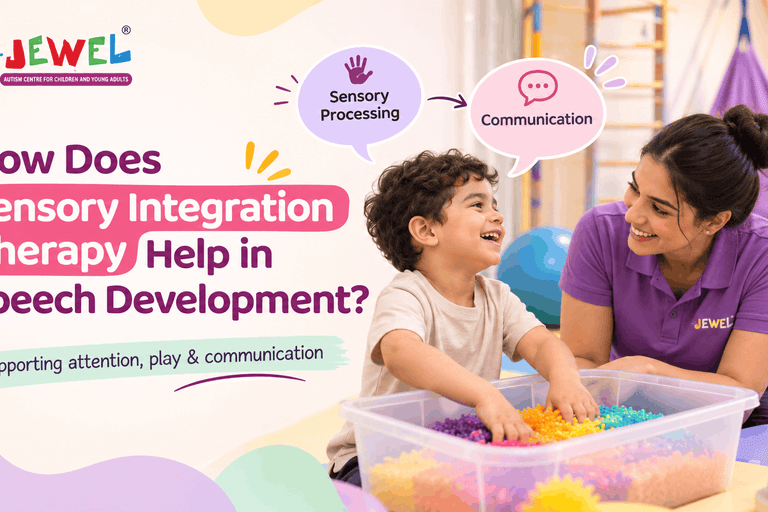
A simple computer analogy can help parents understand the general idea. A computer receives information, processes it and produces an output. Similarly, children receive information through their sensory systems, and the brain processes that information to help organise responses.
However, the brain is much more complex than a computer. Autism should not be described as brain damage or a damaged processing unit.
When a child experiences sensory processing difficulties, everyday activities such as listening, playing, interacting and learning may become more challenging.
Sensory integration therapy aims to address identified sensory processing needs through an individualised occupational therapy approach.
For some children, supporting sensory regulation, body awareness, attention and participation may create better opportunities to engage in communication and learning activities.
Sensory integration therapy does not directly teach a child to speak or guarantee speech development. It may complement speech-language therapy when sensory processing difficulties are identified as part of the child's developmental profile.
What Are the Seven Senses Involved in Sensory Processing?
Many parents know about the five familiar senses, but sensory processing also involves the vestibular and proprioceptive systems.
The seven commonly discussed sensory systems include:
- Visual system: Processes information about what a child sees, including light, colour, shapes and movement.
- Auditory system: Processes sounds, voices and environmental noise.
- Tactile system: Processes touch, pressure, texture and temperature.
- Olfactory system: Processes smells and different odours.
- Gustatory system: Processes tastes and flavours.
- Vestibular system: Helps the body understand movement, balance and head position.
- Proprioceptive system: Provides information about body position, muscles and joint movement.
Interoception is another important sensory system. It helps children recognise internal signals such as hunger, thirst and the need to use the toilet.
Understanding how a child responds to these sensory experiences can help an occupational therapist identify relevant therapy goals.
What Are the Signs of Speech Delay in Toddlers?
Parents are often the first to notice differences in their child's communication development.
Some signs that may indicate a need for developmental assessment include:
- Limited use of gestures, such as pointing or waving.
- Not consistently responding to their name.
- Limited use of words or difficulty combining words.
- Difficulty following familiar spoken instructions.
- Limited attempts to share interests with others.
- Difficulty initiating or maintaining interactions.
- Repeating words or phrases without an obvious conversational purpose.
- Difficulty communicating needs through speech or other methods.
These signs do not independently confirm autism or a speech-language disorder. If parents have concerns, they should speak with a qualified healthcare or developmental professional.
A hearing assessment and a comprehensive communication evaluation may also be recommended. Any loss of previously acquired language or social skills should be discussed promptly with a healthcare professional.
What Is the Right Speech Delay Treatment for Children with Autism?
There is no single treatment plan that works for every child. Effective support begins with understanding the child's communication strengths, developmental needs and areas requiring assistance.
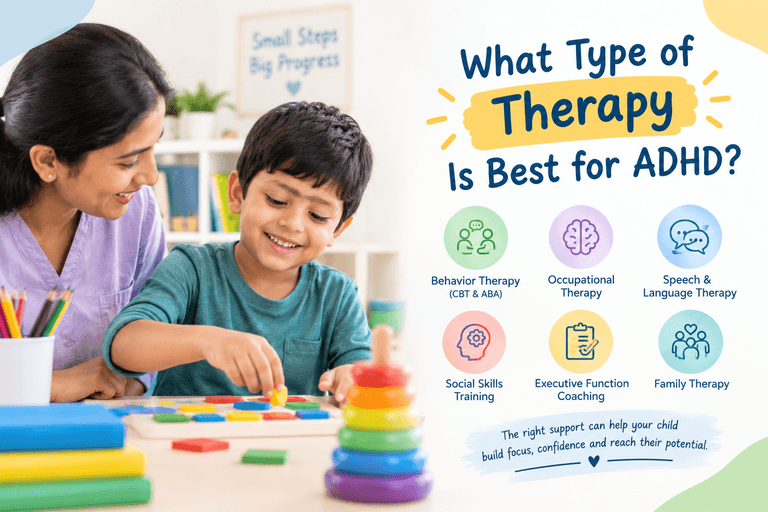
Depending on the assessment, a child's support plan may include:
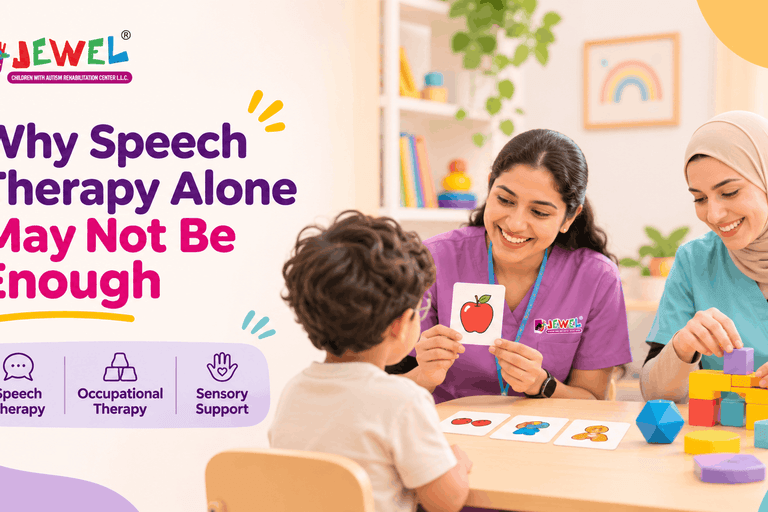
Speech-language therapy: Helps develop receptive language, expressive communication, speech skills, social communication and alternative communication methods when appropriate.
Occupational therapy: Supports everyday functional skills, sensory processing needs, coordination, play and participation in daily activities.
Sensory integration intervention: May be considered within occupational therapy when an assessment identifies relevant sensory processing difficulties. It should be provided by an appropriately trained occupational therapist.
Parent-supported activities: Help children practise meaningful communication and functional skills in familiar everyday environments.
This is the value of multidisciplinary therapy for autism. Different professionals can work together towards complementary goals instead of focusing on only one developmental area.
Parents should also know that children do not have to develop spoken language before they can communicate. Gestures, pictures and augmentative and alternative communication (AAC) can provide meaningful ways to express needs and participate in everyday life.
Why Is Occupational Therapy Different from Physiotherapy?
Occupational therapy and physiotherapy are different healthcare professions, although both may support physical and functional development.
Physiotherapy commonly focuses on movement, strength, mobility, balance and physical rehabilitation.
Occupational therapy focuses on helping individuals participate in everyday activities. For children, this may include play, learning, self-care, coordination, sensory processing and functional independence.
Occupational therapists use different approaches depending on their training and the child's needs. Sensory integration is a specialised approach within occupational therapy, and appropriate training and clinical competence are important when delivering this intervention.
Therefore, parents should understand that occupational therapy is not simply another form of physiotherapy. It addresses a wider range of functional and developmental needs.
Why Is Parent Involvement Important During Therapy?
Children spend much more time with their families than they do in therapy sessions. This makes parents important partners in supporting development.
At JEWEL Autism Centre, parent involvement is an important part of the therapy process.
Our approach includes:
- Parents present during therapy sessions: Parents can observe activities and understand the strategies being used.
- Monthly clinical goal sheets: Parents receive the child's planned therapy goals before the new month's sessions begin.
- Parent progress reports: Families share observations about the child's progress at home and in everyday situations.
- Monthly goal reviews: Progress towards the agreed clinical goals is discussed with parents.
- Quarterly case meetings: Parents and the clinical team review the child's development, discuss challenges and consider future goals.
This approach encourages transparency and collaboration. It also helps connect what happens during therapy with the child's everyday experiences.
Supporting Speech and Language Development at JEWEL Autism Centre
Understanding the causes of speech delay in autistic children is an important step towards finding suitable support.
Speech development involves multiple areas, including language understanding, communication, sensory experiences and social interaction. For this reason, some children may benefit from a coordinated approach involving speech-language therapy and occupational therapy.
At JEWEL Autism Centre, our focus is on understanding each child's individual developmental needs and setting meaningful clinical goals. Through parent participation, monthly goal sheets, progress feedback and quarterly case reviews, we encourage families to remain actively involved in their child's developmental journey.
If you have concerns about your child's speech or communication development, seeking a professional assessment can help identify the areas where support may be beneficial.
Contact JEWEL Autism Centre to learn more about speech therapy, occupational therapy and sensory integration support for children in Dubai.