Why Speech Therapy Alone May Not Be Enough for Children with Speech Delay or Autism
When a child is not speaking at the expected age, one of the first recommendations parents often receive is to begin speech therapy. Speech-language therapy plays....
By Jewel Centre for Autism ·
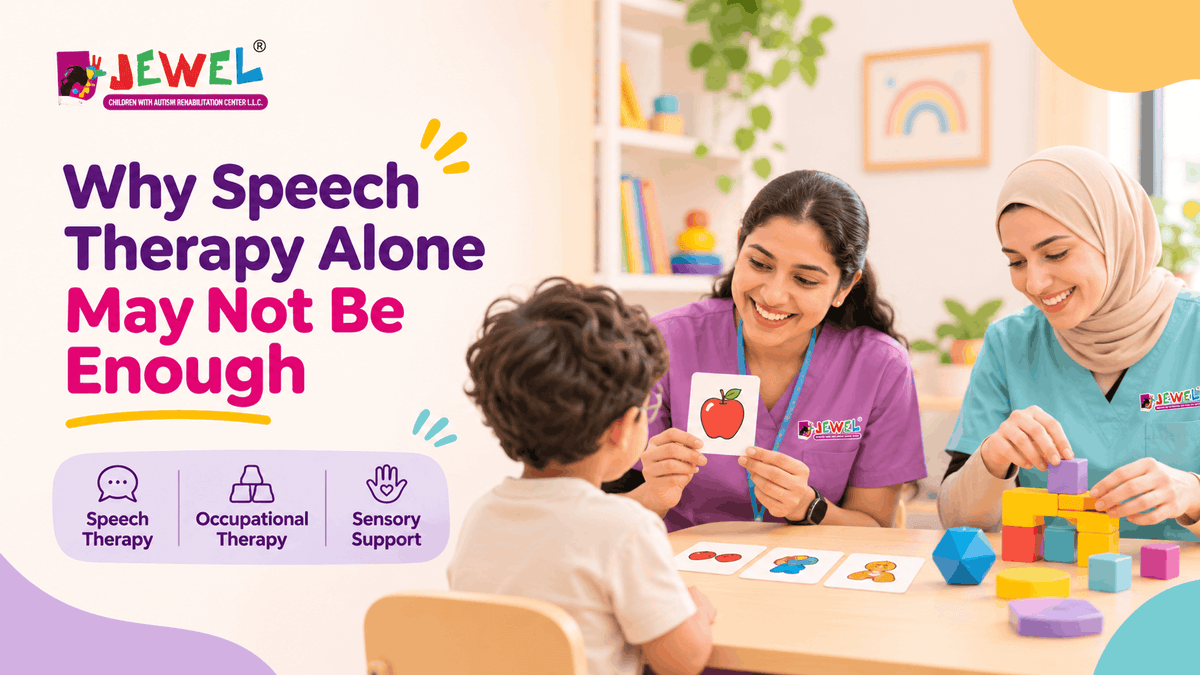
When a child is not speaking at the expected age, one of the first recommendations parents often receive is to begin speech therapy. Speech-language therapy plays an important role in helping children develop communication skills. However, some parents notice that their child continues to experience communication difficulties despite attending regular sessions.
Why does this happen?
The answer may involve more than speech production. Communication is a complex developmental process that involves hearing, understanding, attention, sensory processing, language development and the ability to respond. For some children with autism or speech delay, difficulties in one or more of these areas may affect how they understand and communicate with the world around them.
This is where occupational therapy and speech therapy for autism may work together. In particular, sensory integration approaches may provide additional support when a child's assessment identifies sensory processing difficulties.
At JEWEL Autism Centre, we believe parents should understand the different factors that can influence communication development and why an individualised, multidisciplinary approach can be valuable.
What Is the Role of Speech Therapy for Autism?
Speech-language therapy focuses on developing a child's communication abilities. Depending on the child's needs, a speech-language therapist may work on:
- Understanding words, instructions and questions
- Expressing needs, thoughts and feelings
- Developing vocabulary and sentence formation
- Improving speech sounds and pronunciation
- Building social communication and interaction skills
- Exploring alternative and augmentative communication (AAC), when appropriate
For children with autism, communication needs can vary considerably. Some children may speak but struggle with conversation, while others may use only a few words or communicate through gestures, pictures or other methods.
Speech therapy for autism is important, but communication development may also depend on other underlying developmental needs. This is why some children benefit from a broader assessment rather than focusing only on speech.
Why Speech Therapy Is Not Always Enough on Its Own
One important question parents ask is: If my child is attending speech therapy, why is progress still limited?
There is no single answer. Children may experience different challenges that influence communication, including:
- Difficulty maintaining attention during interactions
- Challenges understanding and processing spoken information
- Sensory sensitivities that affect participation
- Differences in social communication and shared attention
- Receptive language or expressive language difficulties
- Difficulty coordinating responses to sounds, instructions or social situations
A child may hear a sound but not consistently respond to it. Another child may understand familiar instructions but find it difficult to express a response.
These situations do not necessarily indicate a hearing problem or an inability to speak. They may reflect differences in language development, attention, sensory processing or other developmental factors.
This explains why speech therapy is not enough for some children: speech-language therapy addresses communication goals, but other identified developmental needs may require support from additional professionals.
It is important to remember that speech therapy should not be stopped simply because progress is slow. Instead, parents can discuss whether a broader developmental assessment would help identify additional areas requiring attention.
What Is Sensory Integration and How Does It Relate to Speech Delay?
Sensory integration refers to the way the nervous system receives, organises and responds to information from the body and the surrounding environment.
Children receive sensory information throughout the day. They hear voices, see movement, feel different textures, experience body movement and recognise internal body signals. Their brains process this information to help them understand their surroundings and respond appropriately.
A simple way to understand this is to compare the process to a computer. The ears and other sensory systems receive information, while the brain processes that information and helps organise an appropriate response.
If a child experiences difficulties processing certain sensory information, this may affect attention, engagement, participation and interactions. In some children, these challenges may also influence opportunities for communication and learning.
However, sensory processing differences are not the only explanation for speech delay, and sensory integration therapy is not a guaranteed treatment for speech difficulties.
Sensory integration and speech delay are connected in some children because sensory processing can influence the experiences and participation that support communication development.
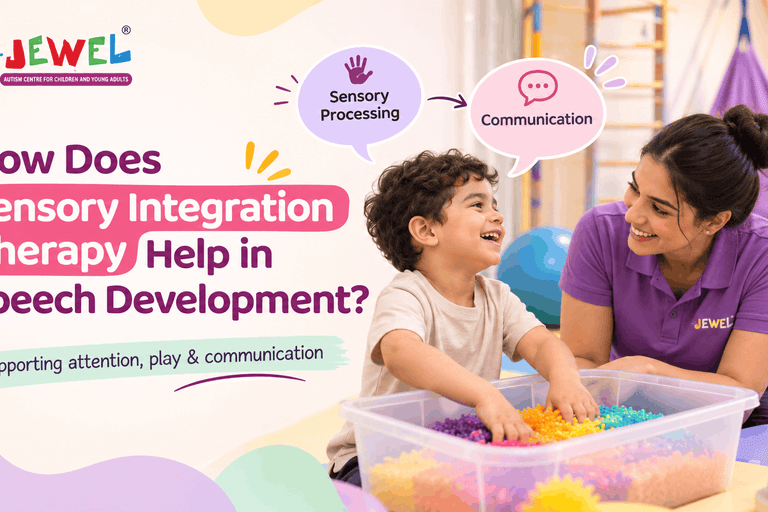
How Can Sensory Integration Therapy Support Communication Development?
Sensory integration therapy is an approach used within occupational therapy to address identified sensory processing needs. It is delivered by appropriately trained occupational therapists following an assessment of the child's individual requirements.
Depending on the child's sensory profile and therapy goals, intervention may involve carefully selected activities that support the child's ability to engage with their environment.
For example, therapy may focus on:
- Improving tolerance of everyday sensory experiences
- Supporting attention and engagement in activities
- Developing body awareness and coordination
- Supporting responses to movement and touch
- Improving participation in play and everyday routines
- Helping the child become more comfortable participating in learning and interaction
These skills may create better opportunities for a child to participate in communication activities and engage with others.
It is important to understand that sensory integration therapy does not directly teach vocabulary or replace speech-language therapy. Instead, it may complement speech delay treatment for autism when sensory processing difficulties are affecting a child's participation and development.
What Are the Seven Senses Involved in Sensory Processing?
Sensory processing involves more than the five senses most people learn about in school. The seven commonly discussed sensory systems are:
- Visual: Processes information received through the eyes, including colours, shapes, movement and light.
- Auditory: Processes sounds, voices and other information received through the ears.
- Tactile: Processes information about touch, pressure, texture and temperature.
- Olfactory: Processes smells and different odours.
- Gustatory: Processes tastes and flavours.
- Vestibular: Provides information about balance, movement and the position of the head.
- Proprioceptive: Helps the brain understand body position and the movement of muscles and joints.
Interoception is also an important sensory system. It helps a person recognise internal body signals such as hunger, thirst, temperature and the need to use the toilet.
Some children with autism may respond differently to particular sensory experiences. For example, a child may be sensitive to loud sounds, avoid certain textures, seek movement or have difficulty recognising body signals.
Understanding these differences can help therapists identify appropriate intervention goals.
Why Are Occupational Therapy and Speech Therapy Both Important?
Parents sometimes confuse occupational therapy with physiotherapy because both involve supporting physical and functional abilities. However, their purposes and areas of focus are different.
Occupational therapy (OT) helps children develop the skills needed to participate in everyday activities, including play, learning, self-care and social participation. Occupational therapists may work across different areas, including sensory processing, fine motor skills, coordination and functional independence.
Sensory integration is one specialised approach within occupational therapy. Not every occupational therapist is automatically qualified to deliver sensory integration intervention; appropriate training and clinical competence are important.
Speech-language therapy focuses on communication, language, speech production and related feeding or swallowing needs when within the therapist's scope of practice.
For some children, combining occupational therapy and speech therapy for autism can provide a more comprehensive approach. Each professional works towards specific goals while considering how the child's different developmental needs interact.
This is the value of multidisciplinary therapy for autism: professionals collaborate rather than treating every developmental concern in isolation.
Why Should Parents Be Present During Their Child's Therapy Sessions?
Parents play an essential role in a child's development because learning does not happen only inside a therapy room. Children also practise communication, interaction and everyday skills at home and in familiar environments.
At JEWEL Autism Centre, parent involvement is an important part of the therapy approach.
Our parent-focused practices include:
- Parents present during therapy: Parents can observe sessions, understand the activities and learn how to support their child's goals.
- Monthly clinical goal sheets: Therapy goals are shared with parents before the month's sessions begin, helping families understand what the team is working towards.
- Parent progress feedback: Parents share observations about their child's progress and experiences outside the centre.
- Monthly goal review: Progress towards the agreed goals can be discussed with parents at the end of the month.
- Quarterly case meetings: Parents and the clinical team review the child's development, discuss concerns and consider adjustments to therapy goals.
This approach encourages collaboration between parents and therapists. It also helps ensure that therapy goals remain meaningful in the child's everyday life.
When Should Parents Consider a Combined Approach to Speech Delay Treatment?
Parents may consider discussing a multidisciplinary assessment when their child:
- Has limited spoken communication or difficulty expressing needs
- Struggles to follow age-appropriate instructions
- Shows significant sensitivity to sounds, touch, movement or textures
- Finds it difficult to participate in play or everyday activities
- Has difficulty maintaining attention during interactions
- Makes limited progress towards communication goals despite ongoing support
These signs do not automatically mean that a child needs sensory integration therapy. A qualified professional should assess the child's individual developmental and sensory needs.
A hearing assessment may also be recommended when there are concerns about how a child responds to sounds or spoken language. Identifying the reason for communication difficulties helps professionals recommend suitable support.
Supporting Autism Speech Development at JEWEL Autism Centre
Every child has different strengths, challenges and developmental needs. Therefore, autism speech development therapy should not follow a one-size-fits-all approach.
At JEWEL Autism Centre, we recognise the importance of looking beyond speech alone. Speech-language therapy, occupational therapy and sensory integration approaches may work together when appropriate to support a child's overall development.
Our focus on parent participation, shared monthly clinical goals, progress feedback and quarterly case reviews helps families remain involved in the therapy journey.
If your child has speech delay or autism, understanding the factors that influence communication is an important first step. Speak with qualified professionals about your child's needs and whether a combined therapy approach may be beneficial.
Contact JEWEL Autism Centre to learn more about speech therapy, occupational therapy and sensory integration support for children in Dubai.
Frequently asked questions (FAQs)
1. Is speech therapy alone enough for a child with autism?
Speech therapy can be highly valuable for developing communication skills. However, some children with autism also experience sensory processing, attention, motor or other developmental difficulties. When these needs are identified, occupational therapy or other interventions may complement speech-language therapy.
2. Why is speech therapy not enough for some children with speech delay?
Some children experience difficulties beyond speech production, such as understanding language, attention, sensory processing or social communication. Identifying these additional needs can help professionals develop a more appropriate therapy plan.
3. Can sensory integration therapy help with speech delay?
Sensory integration therapy may support children whose sensory processing difficulties affect their attention, participation and engagement. It does not directly teach speech or guarantee language development, but it may complement speech-language therapy when clinically appropriate.
4. What is the difference between occupational therapy and speech therapy for autism?
Occupational therapy focuses on everyday functional skills, sensory processing, coordination and participation. Speech-language therapy focuses on communication, language and speech development. Both may be useful when a child's individual assessment identifies needs in these areas.
5. What is the connection between sensory processing and speech development?
Sensory processing helps children organise information from their bodies and environment. Difficulties in processing certain sensory experiences may affect attention, interaction and participation, which can influence opportunities for communication development.
6. Does every child with autism need sensory integration therapy?
No. Every child has different developmental and sensory needs. Sensory integration intervention should be considered only when an assessment identifies relevant sensory processing difficulties and appropriate therapy goals.
7. Why should parents attend their child's therapy sessions?
Parent participation helps families understand therapy activities, observe progress and learn how to support their child's development at home. Regular communication between parents and therapists also helps keep goals relevant to everyday needs.
8. Can occupational therapy and speech therapy happen together?
Yes. When a child's needs indicate that both are appropriate, occupational therapy and speech-language therapy can be provided as part of a coordinated multidisciplinary plan. Therapists can work towards complementary developmental goals.
9. When should parents seek speech delay treatment for autism?
Parents should seek professional advice whenever they have concerns about their child's communication or development. Early assessment can help identify the child's needs and guide appropriate support.
10. Where can parents find speech therapy and occupational therapy for autism in Dubai?
Parents can contact JEWEL Autism Centre to enquire about its child development services, including speech therapy, occupational therapy and sensory integration support. The appropriate services should be determined following an assessment of the child's needs.